Budget Transparency Hub
Willamalane Financial Overview
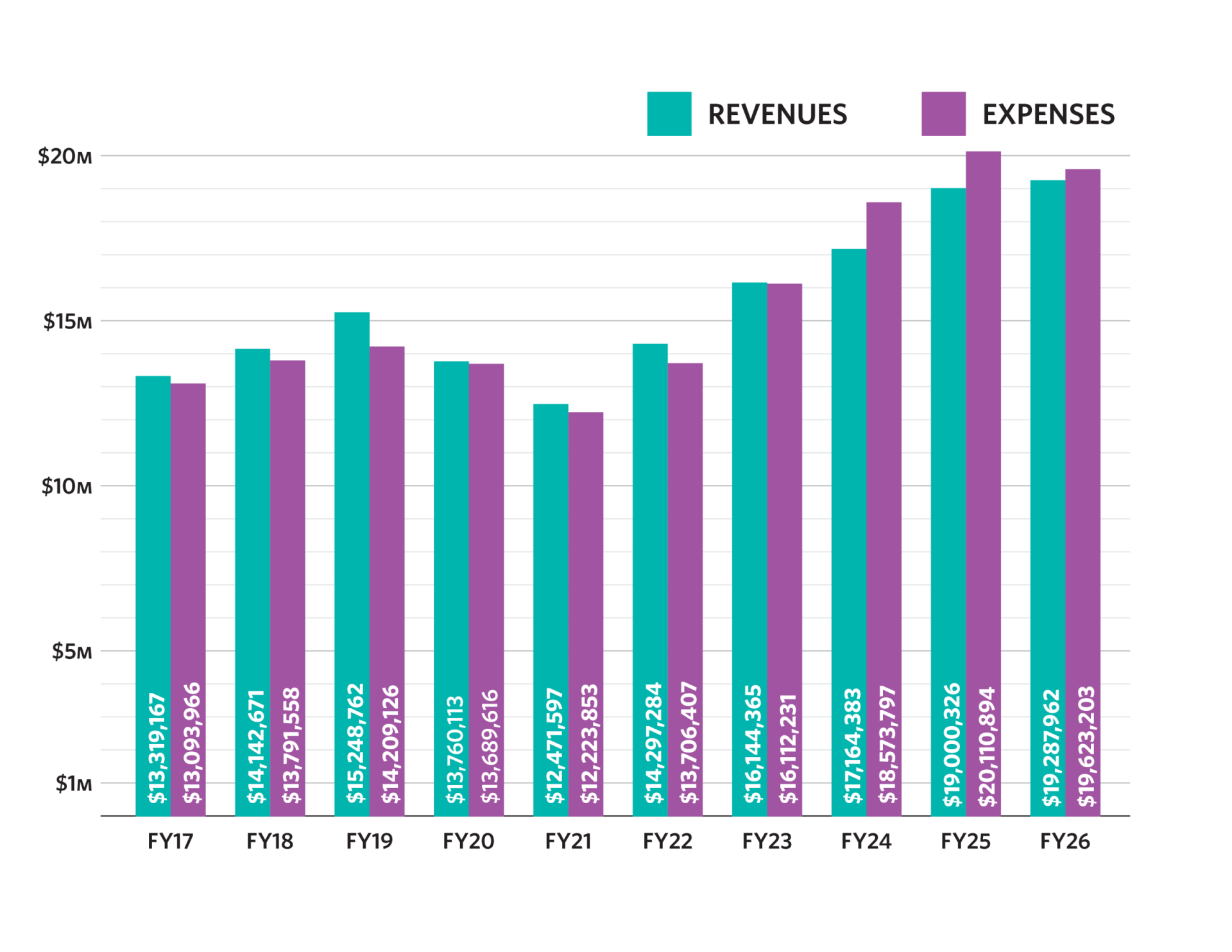
For much of the district’s history, Willamalane has generated revenues in excess of expenses in the district's general fund. This has allowed the district to build and maintain a healthy fund balance, providing financial stability and flexibility to address unexpected needs, respond to emergencies or disasters, and plan and support future priorities. As costs for labor, materials, and services rose, the district's expenses began to outpace revenues starting in 2024. Financial projections indicated that the general fund balance would be depleted by the end of FY27.
Historical Revenue and Expenses
Willamalane's fiscal year runs July 1-June 30. Example: FY26 covers July 1, 2025-June 30, 2026.
Diversified Revenue Strategies
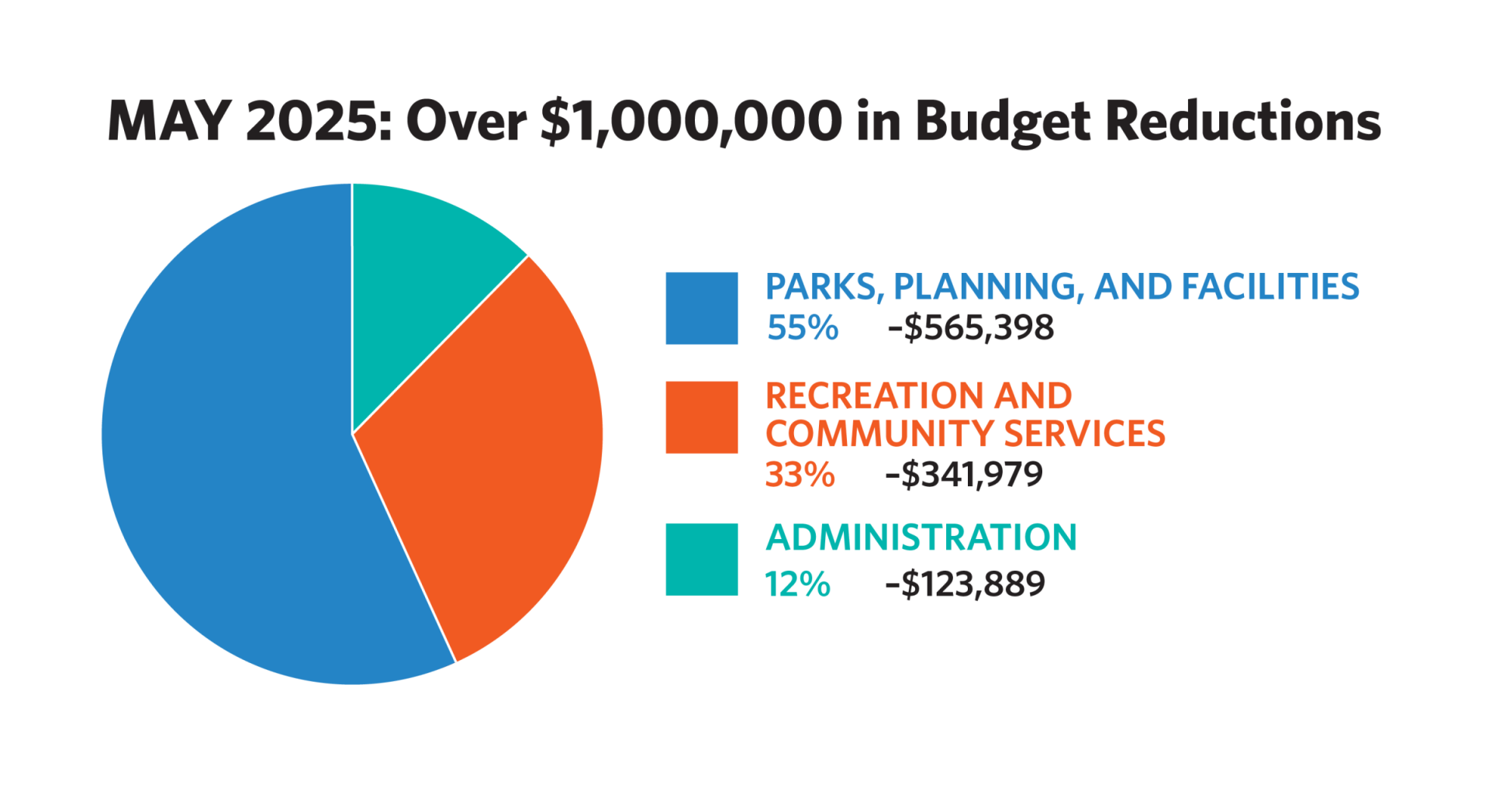
To address Willamalane's budget gap, the district is pursuing multiple revenue strategies to sustain services and cover rising costs. Going into FY 26, Willamalane reduced its annual budget by over $1 million. Throughout the next year, the district has also eliminated vacant positions (including administrative and leadership positions), redistributed responsibilities, reorganized staff to increase efficiency, discontinued some recreation programs, and reduced budgets for materials and services.
In May of 2026, voters passed a five-year levy to help cover the gap in Willamalane's operating budget, allowing the district to preserve current service and staffing levels. Additional steps are planned to address existing budget gaps and cover rising costs over the long term.
The district will also be placing greater emphasis on new revenue opportunities, improving efficiency, reviewing district boundaries, and increasing focus on sponsorships, grants, and donations.
What's Next?
Fall 2026: FY26 Reporting
FY26 reporting is underway as final budget items are reviewed and processed for the previous fiscal year. In September, budget updates for the previous fiscal year will be available.
What's Already Been Done?
Below, you can find a more detailed account of the steps the district has already taken.
July 2026: New Budget Year
The FY27 budget year began July 1, 2026, and quarterly financial updates will be available each quarter of the fiscal year.
July 2026: Out-of-District Price Increases
Beginning July 1, out-of-district community members will see price increases for Willamalane facilities. There will be no increases to in-district facility fees at this time.
- About In-District and Out-Of-District: Anyone who lives or owns property within Willamalane's district pays the lower, in-district rate for programs and classes because they support Willamalane with property taxes. Everyone who lives outside the district pays the higher out-of-district rate. Willamalane's district boundaries roughly align with the city of Springfield, but there are some differences. To see if you live in-district, use this map.
June 2026: FY 27 Budget
On June 16, Willamalane hosted its budget committee meeting to review the proposed FY27 budget. The minutes are available here. The budget was officially approved on June 24 at a special board meeting. See the current budget documents here.
Winter-Spring 2026: Local Option Levy
Willamalane put a proposed local option levy before voters in the May 19 election to stabilize budgets and preserve current levels of service as the district looked toward long-term financial solutions. Willamalane’s Local Option Levy was narrowly passed by voters. The levy was one part of a multi-pronged approach to stabilize Willamalane’s budgets and ensure long-term sustainability.
Fall 2025: District Reorganization and Future Fiscal Planning
Following two director-level resignations, Willamalane reviewed its staffing and organizational structure. Instead of filling vacant administrative and leadership positions, responsibilities were redistributed among existing staff. Any employee who assumed substantial new responsibilities was promoted to reflect the new duties. This resulted in increased efficiency, increased focus on new revenue streams, and overall savings compared to previous personnel budgets. Willamalane conducted a comprehensive wage study within the last three years to ensure all positions are fairly and competitively compensated, and the current wage and salary schedule is available here.
Staff also developed a five-year strategic plan designed to reduce reliance on additional tax revenue by strengthening sponsorship and fundraising opportunities, identifying new revenue streams, and improving efficiency through the FY26 organizational restructuring.
While these actions provided short-term financial relief and delayed the projected depletion of the general fund balance by one year, they were not enough to sustain current service levels over the long-term.
May 2025: $1M in Budget Reductions
In planning for fiscal year 2026, Willamalane reduced its annual budget by more than $1 million. These reductions included a wage freeze for the executive director, other directors, no merit increases for non-bargaining unit leadership and part-time staff, significant reductions in materials and services, reduced recreation staff hours, and the elimination of one recreation program that served a relatively small number of community members.