Wildfire Prevention and Oak Habitat Restoration
Willamalane conducts critical wildfire prevention work across the district. At Willamalane, nearly 1,500 acres of natural areas benefited from these efforts to reduce invasive species and restore native habitats. These coordinated efforts improve ecosystem health and protect urban-adjacent neighborhoods from wildfire risk.
Ecological burns and fuels-reduction work is conducted with the safety of neighbors and the broader community in mind. Temperature, humidity, wind conditions, and air quality must be favorable before a burn can proceed. This work is possible through the Rivers to Ridges partnership, permitting through Lane Regional Air Protection Agency, and local partners Eugene-Springfield Fire and Oregon Department of Forestry.
Active Alerts and Project Updates
Current and upcoming project details involving controlled fire will be posted here.
- Check back here or visit the alerts page
- Subscribe here to the Dorris Ranch alerts and closures newsletter
- Follow Willamalane Park and Recreation District and Dorris Ranch on Facebook and Willamalane on Instagram
Fire as a Historic Land Management Tool
For thousands of years, the Kalapuyan People have used fire as a tool to protect and cultivate the land. As a result, certain species in the Willamette Valley have evolved to depend on fire as a routine disruption. However, plant communities and their related habitats haven't benefitted from this means of disruption due to fire suppression and other post-settlement land management practices. A contributing factor was the forced removal of Indigenous people from the region and suppression of Indigenous land stewardship practices (such as controlled burns). Despite enduring challenges, the Kalapuyan People continue to make important contributions to the environment today.
Today, Willamalane works with partners to conduct controlled burns that continue to offer numerous benefits to wildlife, native plant communities, land resiliency, and protection against uncontrolled wildfires.
Success Story: Ecological Burn
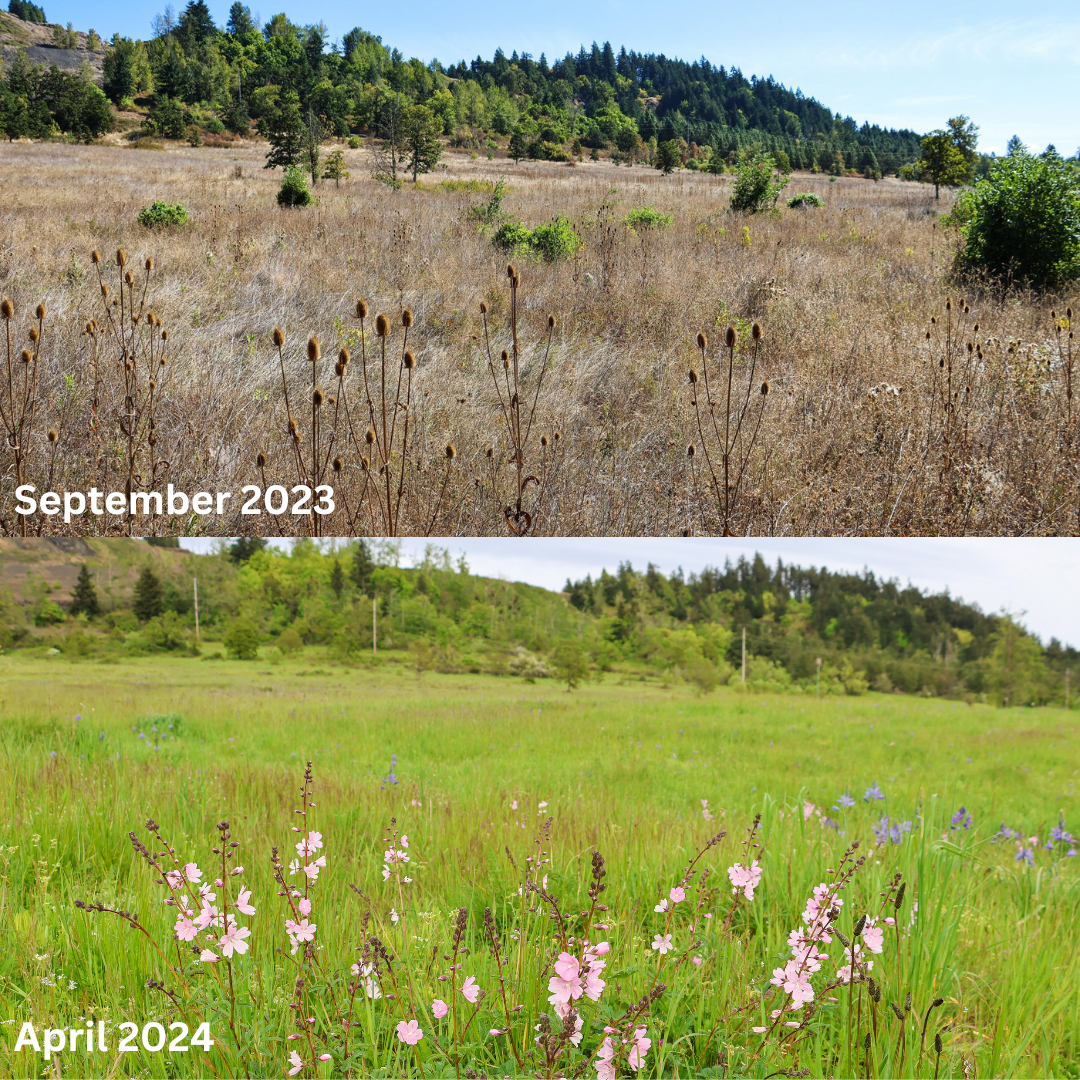
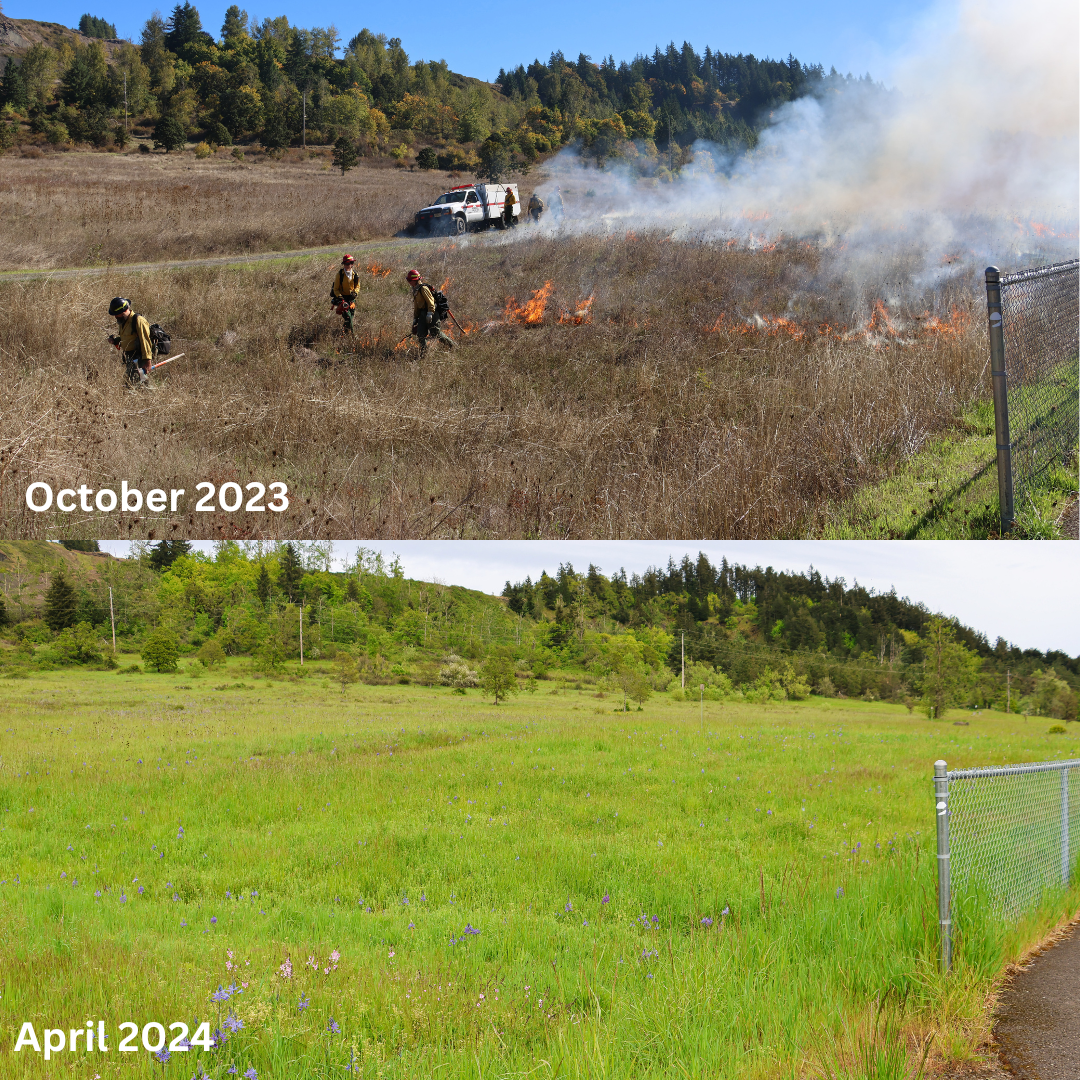
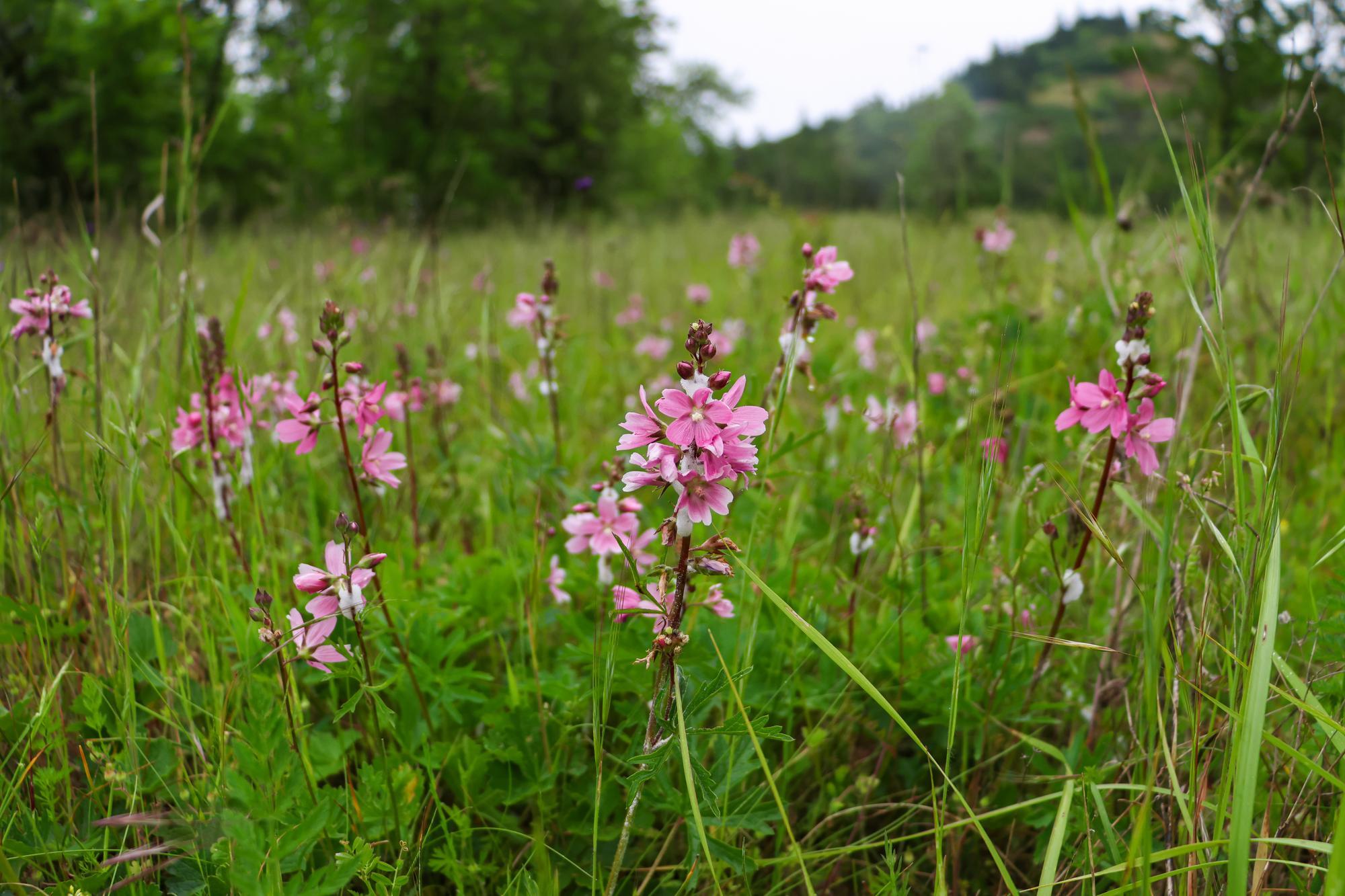
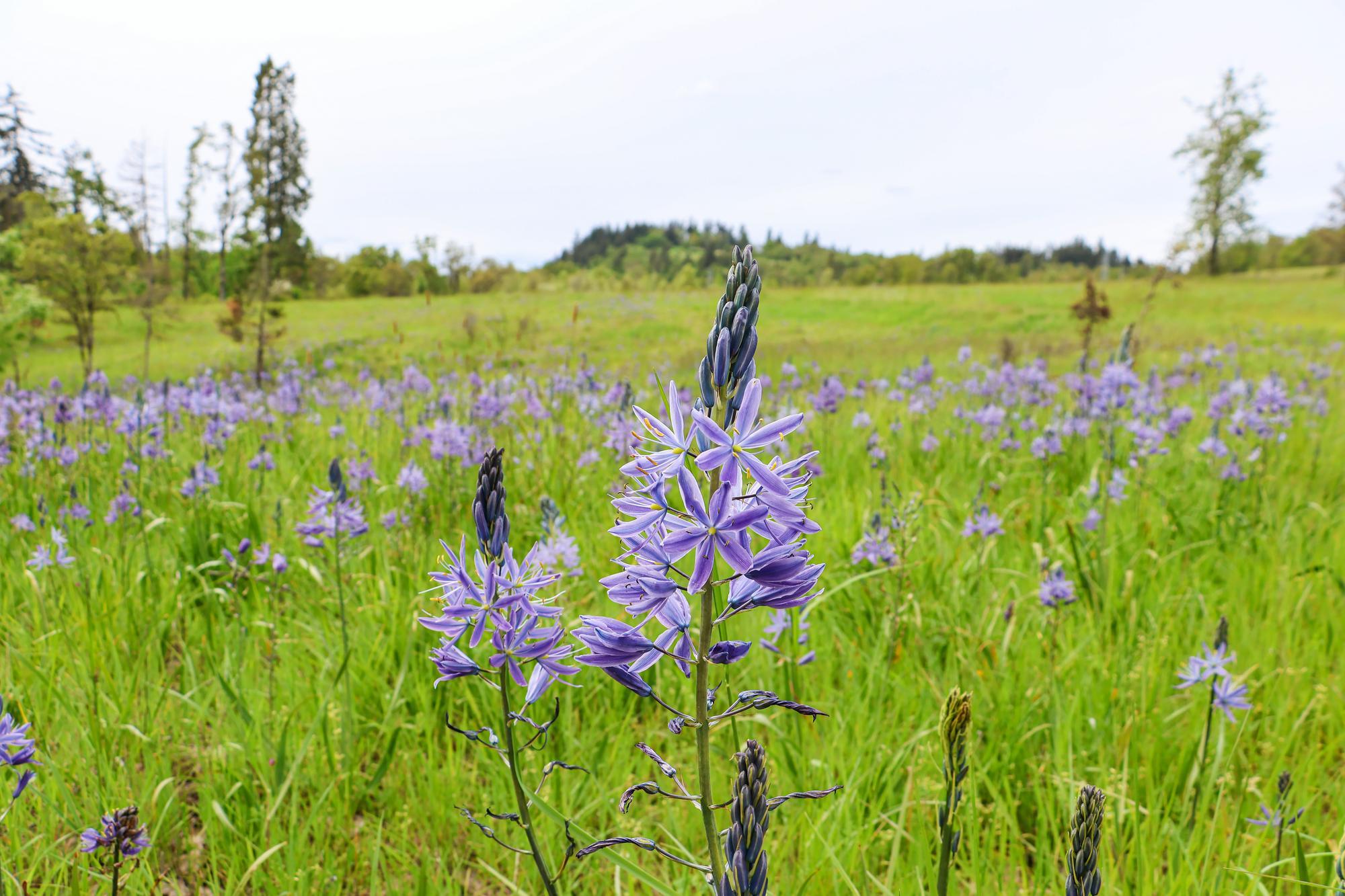
In the fall of 2023, Willamalane and Rivers to Ridges partners completed a successful series of ecological burns in the oak prairie at Dorris Ranch. After the burn, Willamalane spread native seeds throughout the prairie to capitalize on the nutrient-rich soil and primed conditions. The following spring, the prairie put on a spectacular wildflower display of purple camas and pink checkermallow blooms. Read more.
Benefits of Ecological Burning
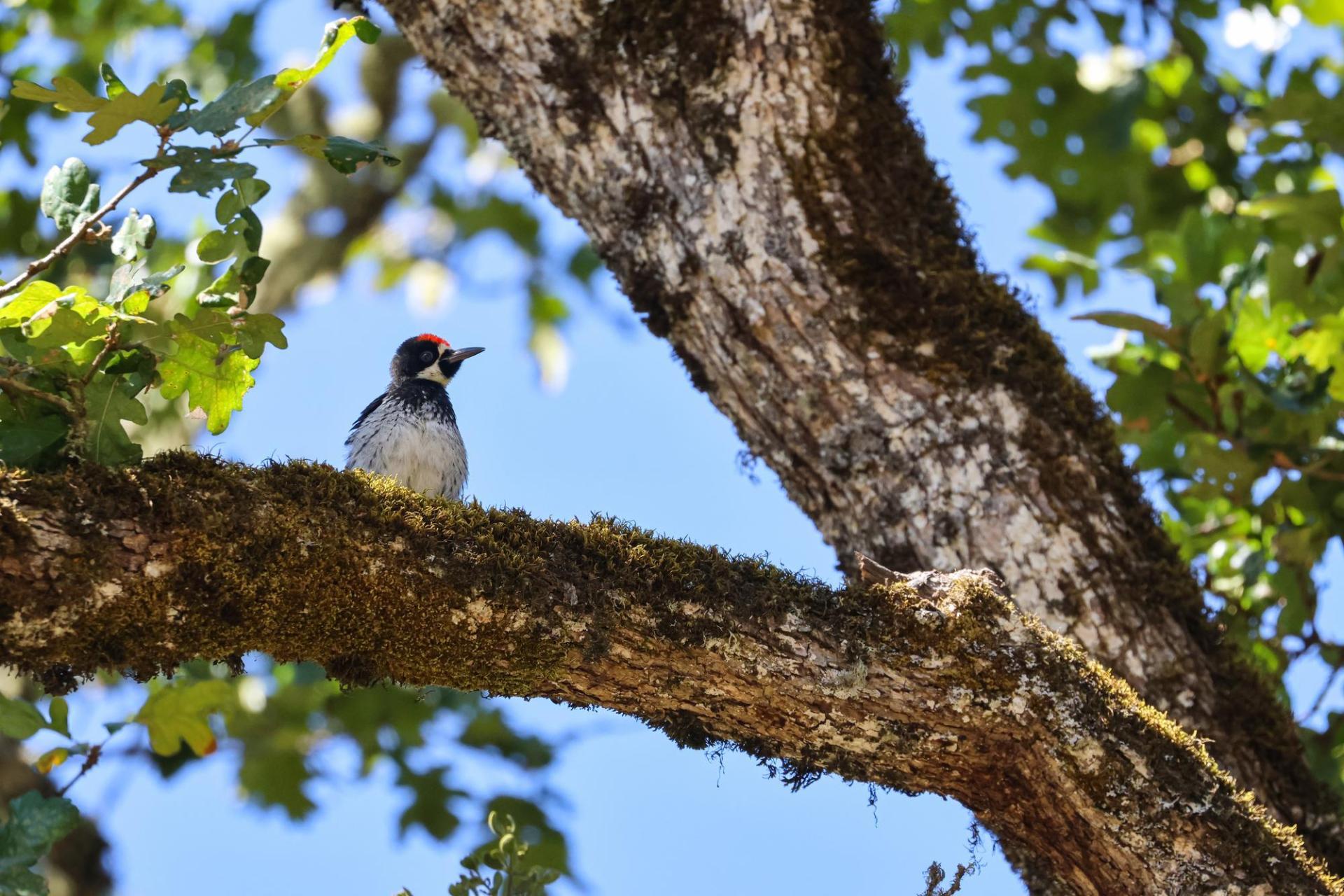
The Oregon white oak is a keystone species that supports more than 200 native plant and animal species, including acorn woodpeckers, western bluebirds, western gray squirrels, northern pygmy owls, and California myotis bats. Oak habitats are some of the most endangered habitats in the Pacific Northwest. Scientists estimate that there is only about 7% of the oak woodland and 2% of the oak savanna habitat remaining in the Willamette Valley today.
Using controlled, low-intensity fire as a land management tool has many benefits, including:
- Recycling nutrients in the soil
- Reducing fuel for uncontrolled wildfires
- Improving wildlife habitat
- Controlling pests and disease
- Suppressing invasive species
- Reducing dependence on fossil fuels and herbicides
- Replicating the historic disturbance native species have evolved to depend on
Understanding The Methods
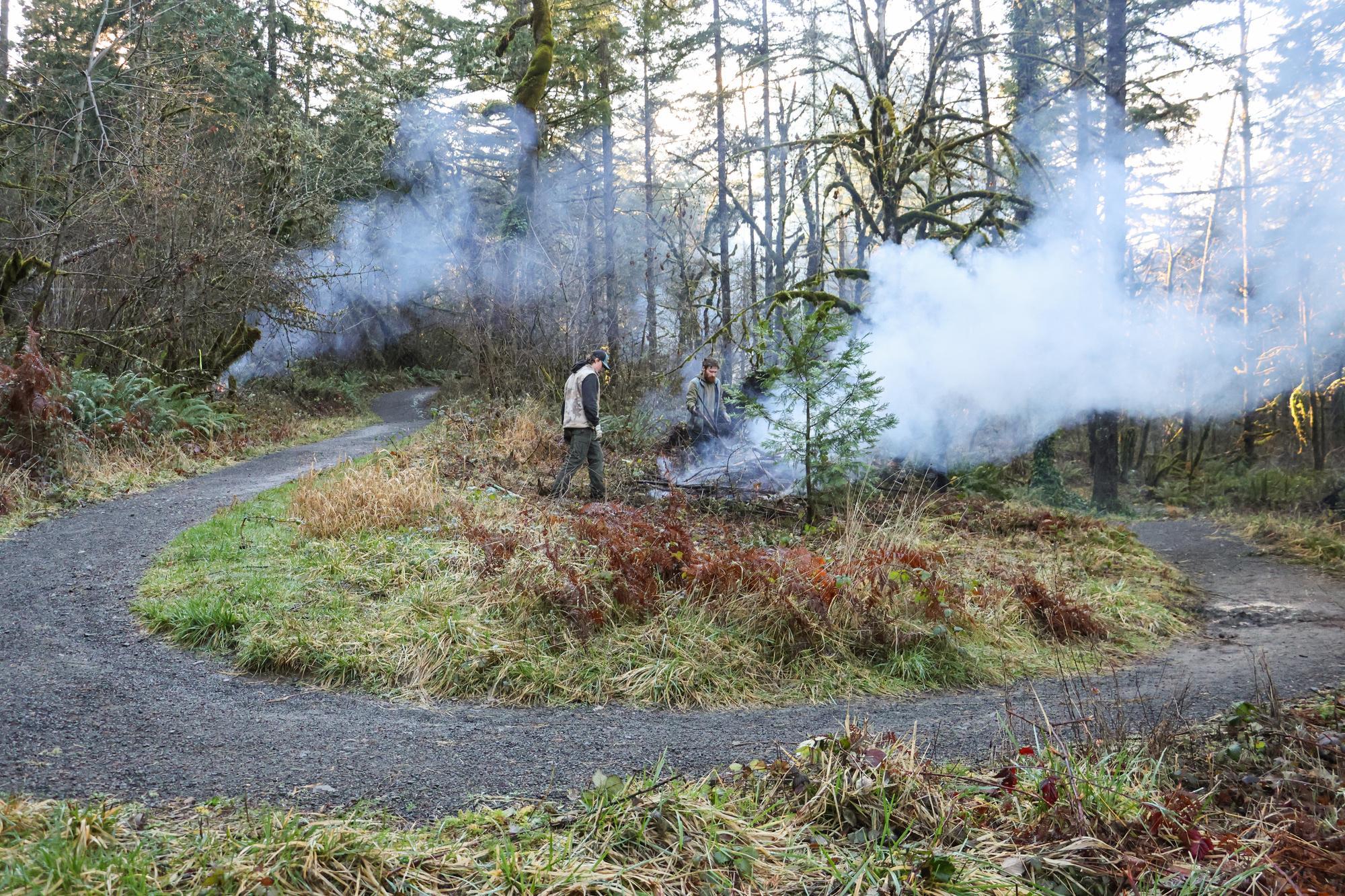
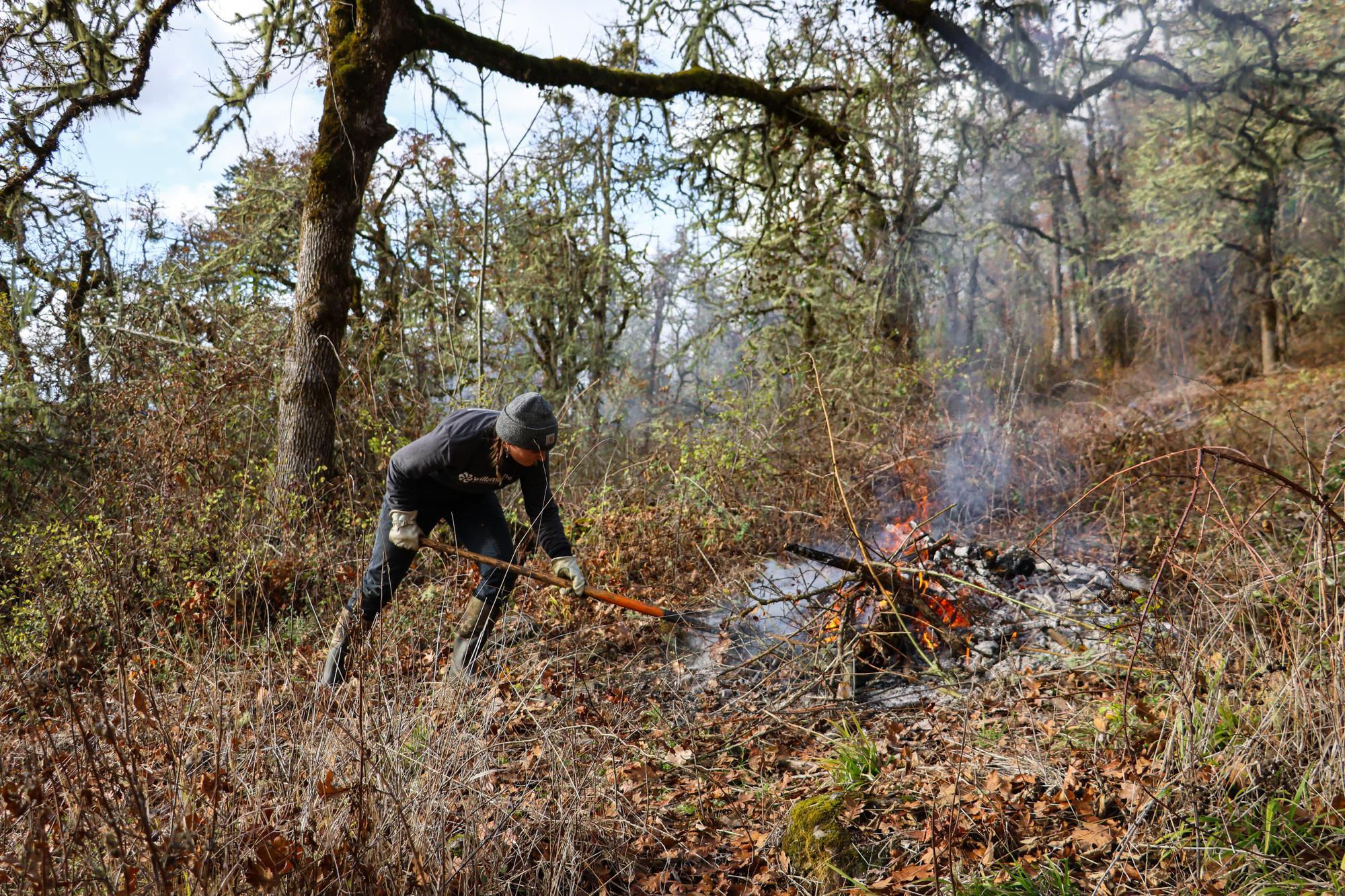
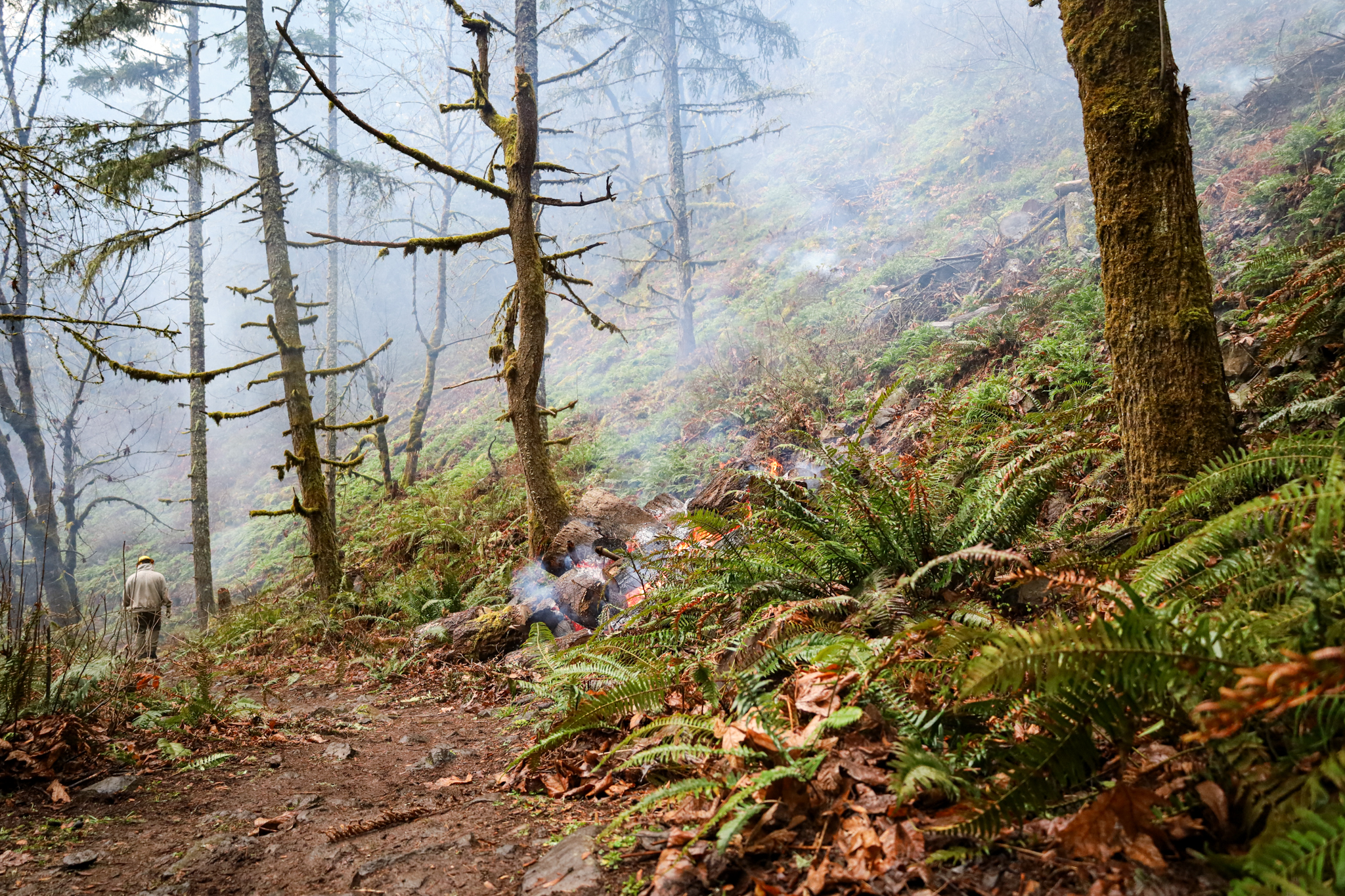
Hazardous Fuel Reduction: Mechanical thinning, chipping, or removal of trees and brush to decrease the intensity, severity, and rate of spread of uncontrolled wildfires. Burning occurs under strict weather conditions outlined in the burn prescription, often performed November-May
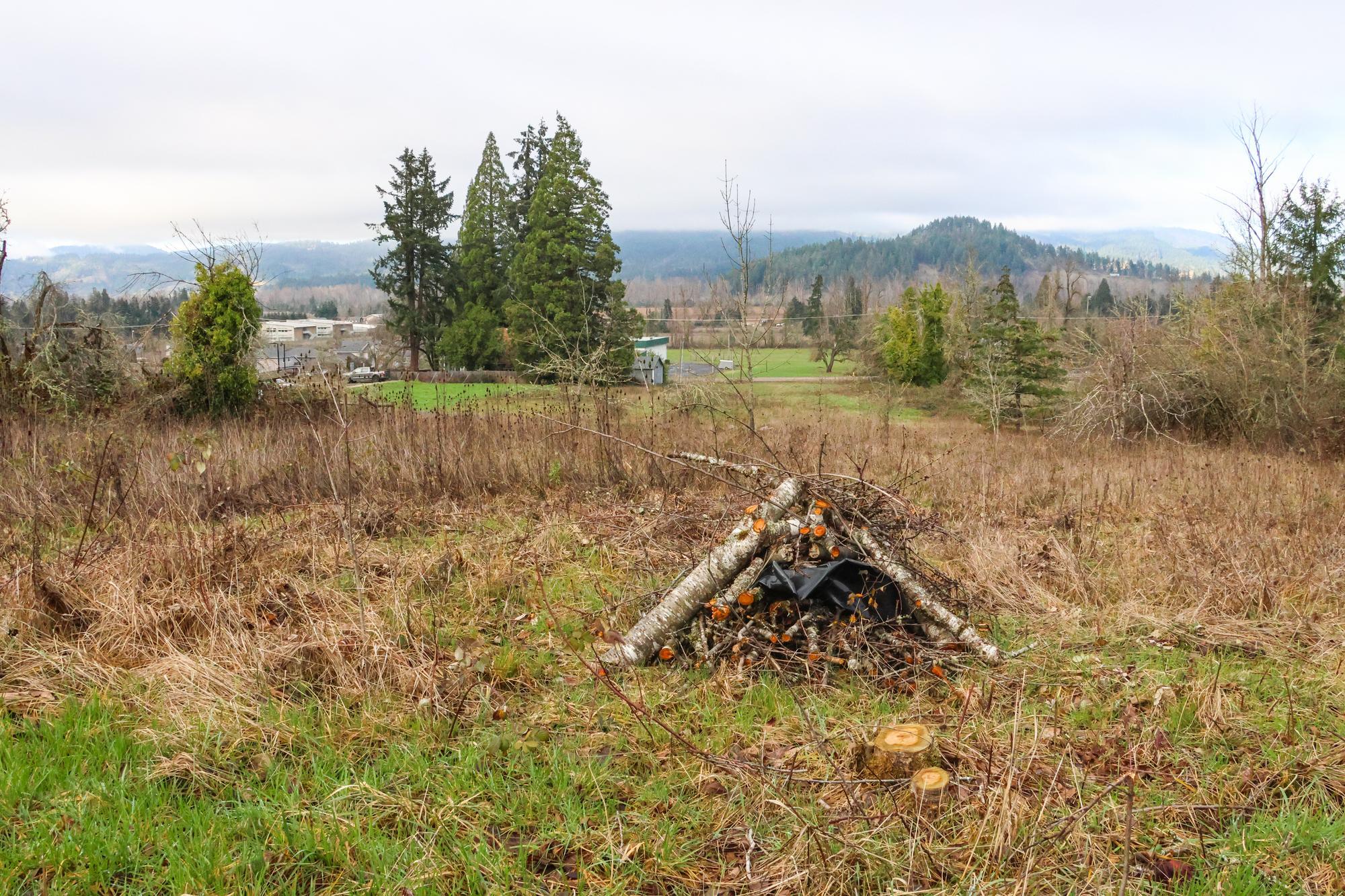
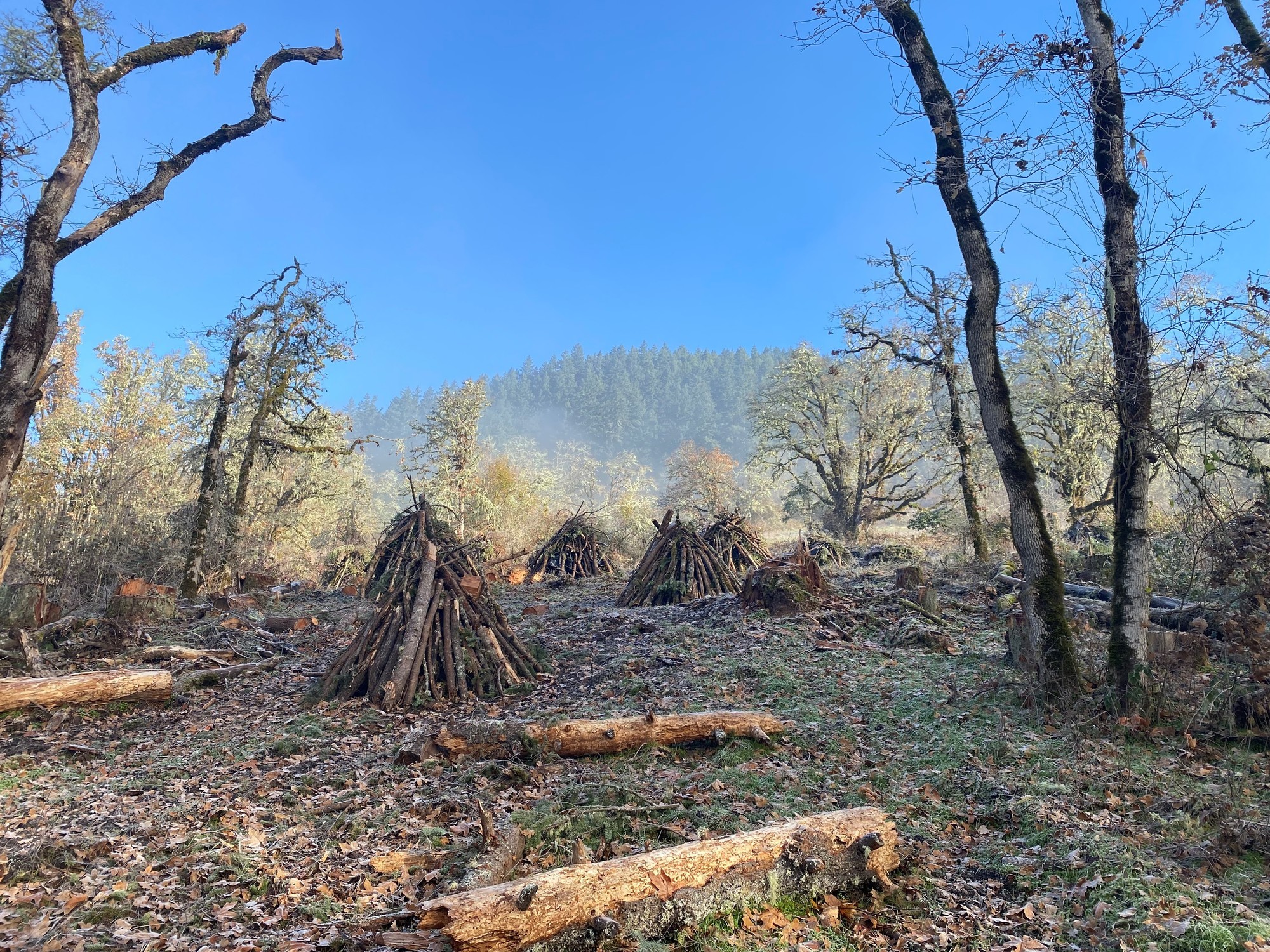
Pile Burning: Controlled ignition of cured woody debris piles. Fire practitioners are on site while piles burn and will reseed burned areas with native vegetation when the piles cool. Burning occurs under strict weather conditions outlined in the burn prescription, often performed November-May.
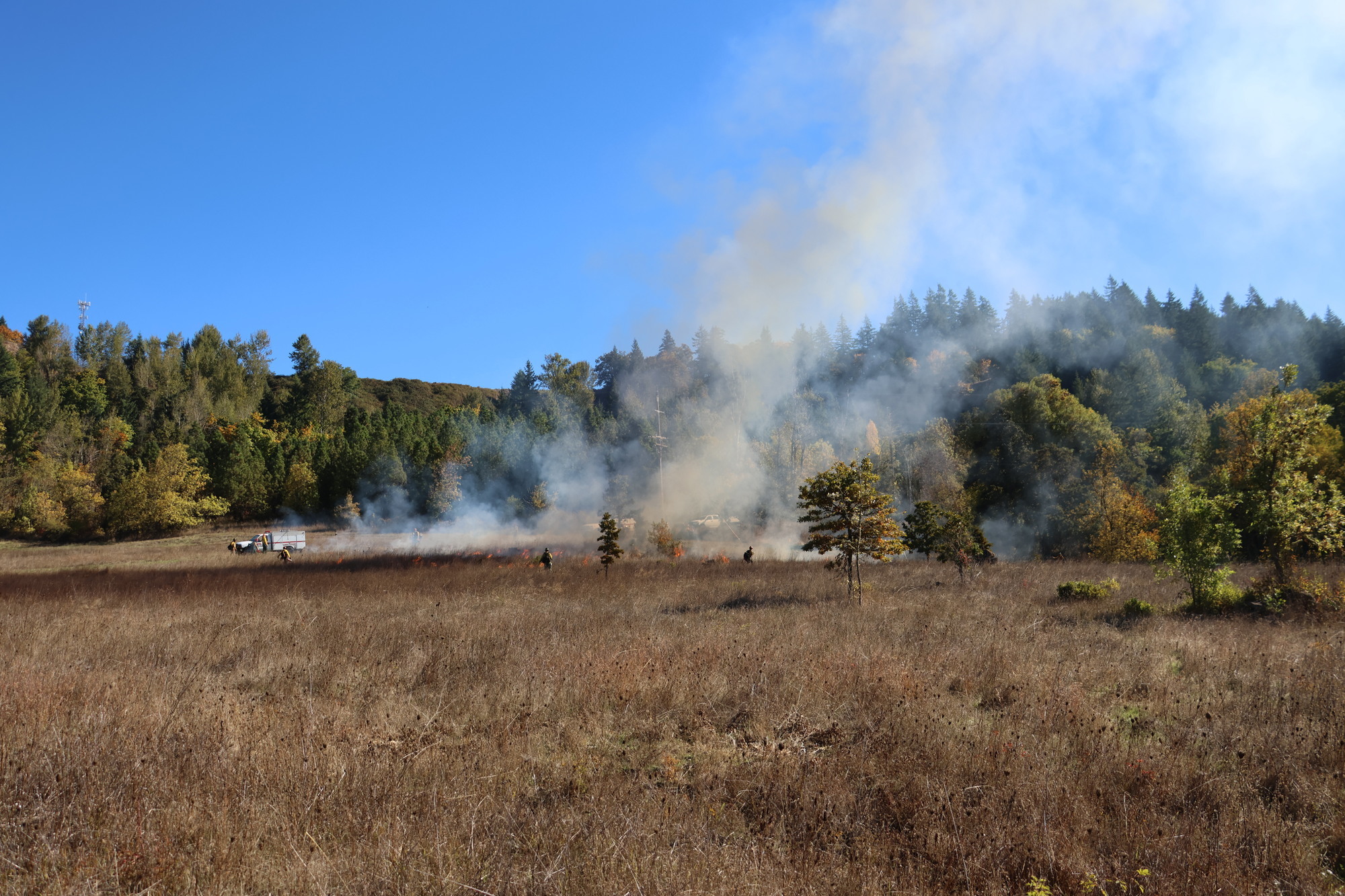
Ecological Burning (Broadcast Burning): Low-intensity, controlled fire that spreads across a broad area (like prairies) to mimic natural disturbance cycles. Typically performed in the fall when fire prescription conditions are met.
Oak Release: A method of oak habitat restoration that involves the removal of encroaching conifers to increase the oaks’ access to light, water, and nutrients.
Safety and Planning
Willamalane works closely with members of the Rivers to Ridges Partnership to collaborate on shared recreational and ecological goals for the region. This includes sharing resources and combining efforts to safely apply fire to the landscape. Before a controlled burn can take place, Willamalane follows several required steps:
- Permitting is obtained from Lane Regional Air Protection Agency (LRAPA) and local fire regulators, Eugene-Springfield Fire.
- A certified fire expert (or “burn boss”) writes a detailed prescription, or burn plan, that outlines the full scope of the burn, resources needed, and the temperature, humidity, and wind speed conditions necessary to complete the burn.
- Eugene-Springfield Fire reviews the burn plan and local agencies and neighbors are informed of the upcoming burn.
- A test burn is performed at the intended location, where the fire behavior is closely monitored before continuing with the burn plan.
Wildfire Prevention and Habitat Restoration Efforts
Priority sites within the district
The proposed Eugene-Springfield Community Wildfire Protection Plan identifies Dorris Ranch and Thurston Hills Natural Area as prominent wildland-urban interfaces, or areas where human development meets natural wildlands such as forests and grasslands. These areas are at a higher risk for wildfires and other environmental hazards and are prioritized for strategic management to mitigate that risk.
Thurston Hills Natural Area
Thurston Hills Natural Area is a prioritized area of concern due to its proximity to urban development and recent catastrophic wildfires, such as the Holiday Farm Fire. Effective management of vegetation throughout the natural area is crucial to protecting Springfield from wildfire. Willamalane works year-round to proactively manage that risk through hazardous fuel reduction and pile burning. Several phases of fuel reduction have been completed at Thurston Hills Natural Area, and work continues.
In partnership with Middle Fork Willamette Watershed Council, 99 cumulative acres of rare oak habitat were treated on the south side of Thurston Hills Natural Area. This three-phase project involved oak release, fuel reduction, and the establishment of a strategic fuel break along the main access road. These first steps of managing fuel loads are laying the groundwork for potential future ecological burning at Thurston Hills.
Hazardous fuel reduction throughout Thurston Hills Natural Area remains a priority for the district, and more phases can be expected as funding allows.
Dorris Ranch
Oak habitat restoration at Dorris Ranch expanded in 2017, as restoration grant funding from OWEB and collaboration with Middle Fork Willamette Watershed Council allowed the district to achieve more ambitious efforts to revive the site’s historic oak habitat. During several phases of oak release, crews removed invasive species, strategically thinned encroaching conifers, and burned debris piles to reduce hazardous fuels across 48 acres.
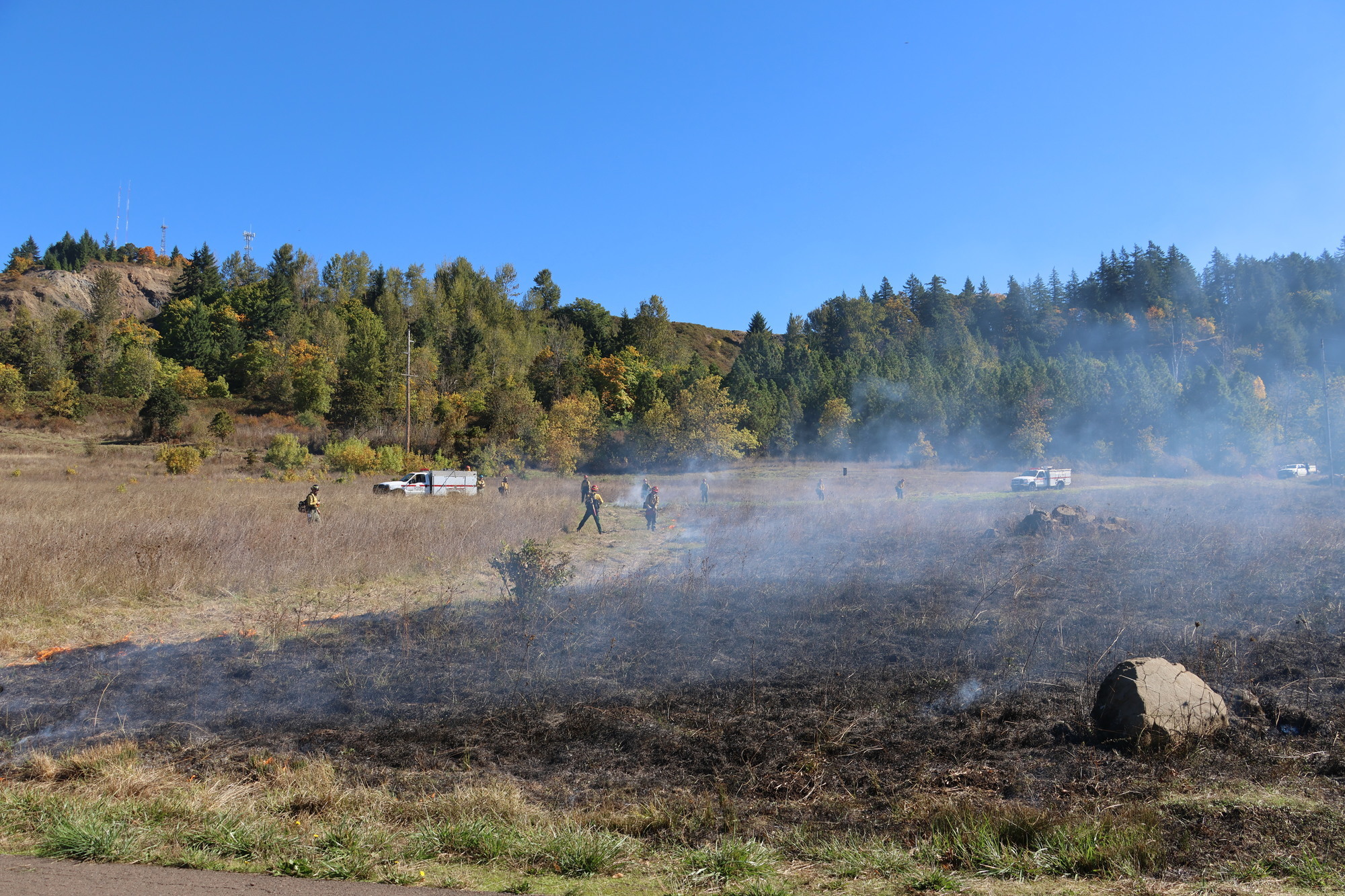
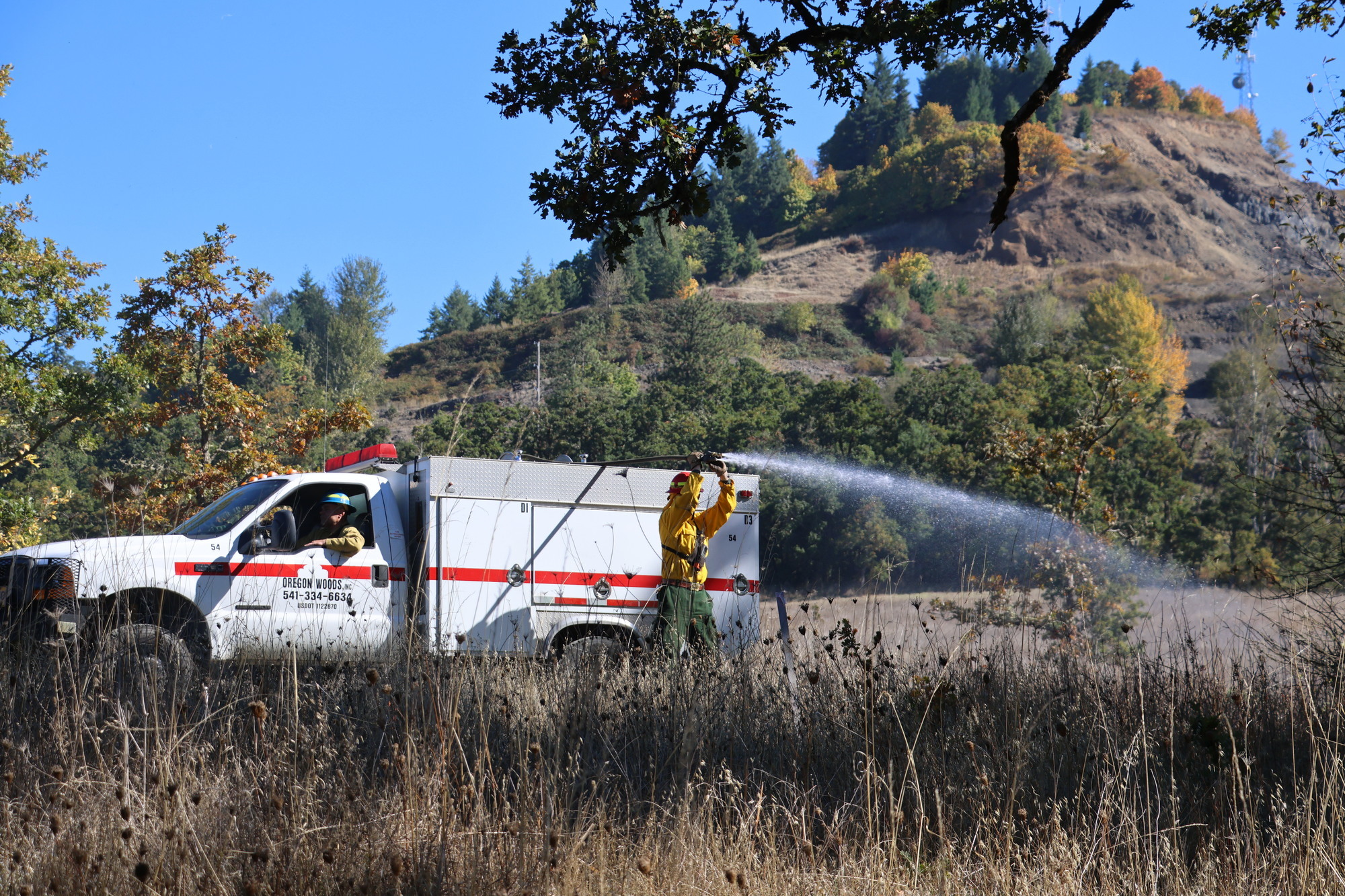
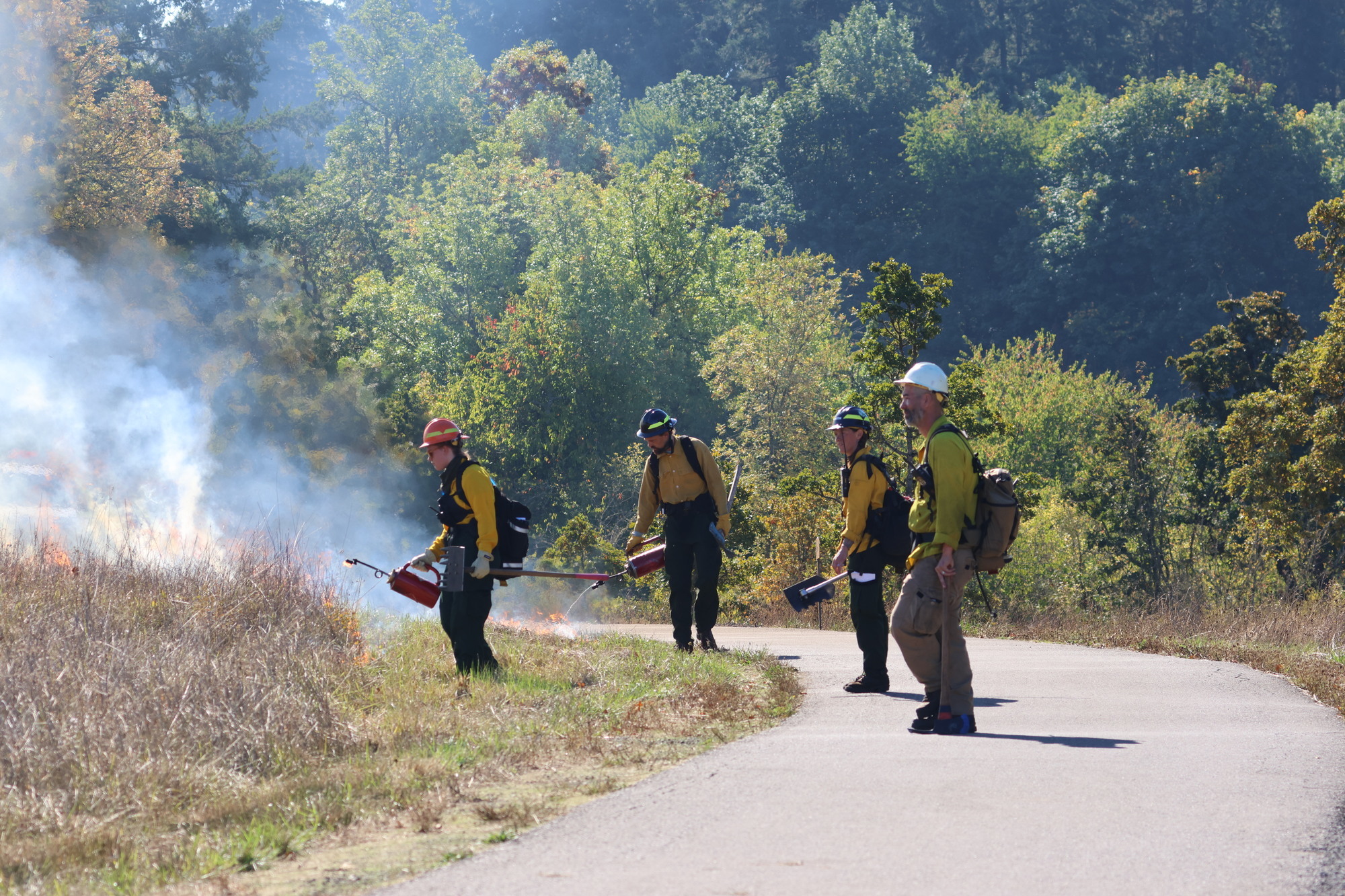
In recent years, the oak prairie adjacent to the Middle Fork Path has been the site of a series of successful ecological burns using broadcast burning—low-intensity fire applied across large, open areas. Ecological burns were conducted on 9 acres in 2023 and 22 acres in 2025, resulting in a healthy, thriving oak prairie with greater biodiversity and lower fuel loads. Dorris Ranch is currently the only site within the district where Willamalane has implemented ecological burning in the form of broadcast burning.
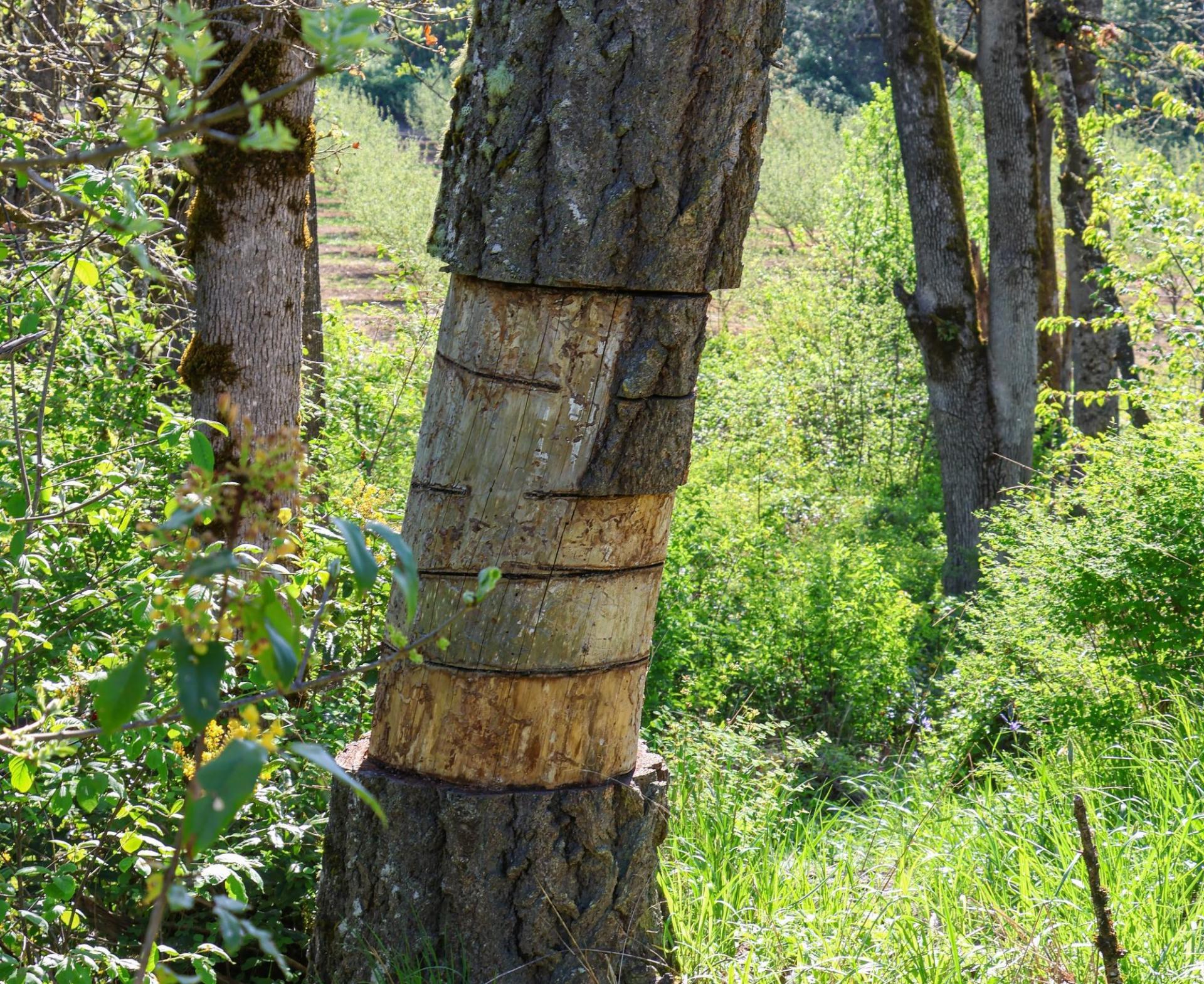
During oak release, some conifers are removed entirely, while others are girdled and left as snags to become valuable wildlife habitat for cavity-nesting birds like acorn woodpeckers, California myotis bats, and northern flickers, and mammals like western grey squirrels.
In recent years, the oak prairie adjacent to the Middle Fork Path has been the site of a series of successful ecological burns using broadcast burning—low-intensity fire applied across large, open areas. Ecological burns were conducted on 9 acres in 2023 and 22 acres in 2025, resulting in a healthy, thriving oak prairie with greater biodiversity and lower fuel loads. Dorris Ranch is currently the only site within the district where Willamalane has implemented ecological burning in the form of broadcast burning.
Partnerships and Funding
Willamalane relies largely on grant funding, collaborative partnerships, and its general operating budget to accomplish restoration and fire mitigation projects.
Restoration grants from Oregon Watershed Enhancement Board (OWEB) and the Bureau of Land Management (BLM) community assistance funds have contributed significantly to oak release projects at Thurston Hills and Dorris Ranch, in close collaboration with the Middle Fork Willamette Watershed Council.
Rivers to Ridges is a voluntary association of 19 organizations working together to advance the protection, restoration, and effective management of park and open space resources in the southern Willamette Valley. Partners share resources and expertise as they work towards common goals. Collectively, Rivers to Ridges partners work to implement ecological burns throughout Eugene-Springfield, including at Dorris Ranch.
Other Key Partners
- Oregon Department of Forestry (ODF)
- Lane Regional Air Protection Agency (LRAPA)
- Eugene-Springfield Fire
- Oregon State University (OSU)
Community Resources
- View a map of LRAPA permitted burns in Eugene-Springfield
- Download the Watch Duty app to view updates on wildfires and prescribed burns in your area.
Local News
- Register Guard: 79 Prescribed Burns Planned for Eugene-Area This Fall (2025)
- Lookout Eugene-Springfield: Fighting ‘Fire With Fire’ Grows in Eugene, Springfield (2025)
- Lookout Eugene- Springfield: Here’s Where PRescribed Burns are Planned in Eugene, Springfield (2025)
- KEZI 9 News: Native Wildflowers in Bloom at Dorris Ranch Following Ecological Prescribed Burns (2024)