
Dorris Ranch will be closed Aug. 29-31 for agricultural maintenance.
South Second and Dorris streets
Dorris Ranch is listed in the National Register of Historic
Places.
For those who truly enjoy the experience of seeing history and nature
firsthand.
There is no substitute for the excitement of visiting an actual historical place—to
feel, touch, smell and even taste the products of this bountiful land. Dorris
Ranch, Springfield’s unique living history farm, has succeeded in bringing Oregon
history to life. Established in 1892, this 250-acre farm is Oregon’s oldest working
filbert (hazelnut) farm.
Friday, Aug. 19, 6:30-9 p.m.
Dorris Ranch • $10 in advance; $13 at the gate
Bluegrass music and a barbecue in the perfect setting! Relax to the music of the Whiskey Chasers and the Coast Fork Bluegrass Band. Food by Hop Valley. Weather permitting. Beverages are an additional cost.
Monday-Wednesday, Oct. 24-26
Dorris Ranch • RESERVATIONS REQUIRED: $6 ID/$7.50 OD
Ride through the "haunted" trails of Dorris Ranch, where ghosts and goblins emerge from the shadows of filbert orchards. Warm up afterward with some hot apple cider and games and crafts. Tickets go on sale Oct. 3. This family-friendly event sells out fast; call 541-736-4544 for reservations.
School
Field TripsGroup tours are offered in the spring and fall. Call 541-954-7213 for more information, or register online. Costumed living history interpreters lead students through a historical adventure, emphasizing relationships between people, the environment and the past.
Note: School tours are subject to cancellation due to orchard maintenance.
Stone Age to Space Age Adventure
It may not be "Man vs. Wild," but students can learn many of the same outdoor skills while exploring ancient cultures in a two-hour adventure at Dorris Ranch. Topics will include animal tracks and signs, orienteering with map and compass and modern GPS devices, wildlife observation, shelter and fire-starting skills and basic stone tools, as well as an overall appreciation of the natural world. Students should dress for the weather. This program is made possible by a grant from Weyerhaeuser Co.
People of the Land: Kalapuyas, Trappers and Pioneers
Who lived in the Willamette Valley before us? During this educational tour, students experience the lives of Kalapuya Indians, Hudson's Bay Co. trappers and Oregon Trail pioneers. Learn the traditional hunting methods of the Kalapuya. Visit the trading post and examine furs. Lend a hand at the pioneer cabin.
Pioneer Homestead: Life after the Trail
Experience the life of an Oregon Trail immigrant at the Masterson homestead. Step back in time to 1852 when William, Eliza and their five young children settled their donation land claim on what was to become Dorris Ranch. Visit their log cabin, help tend crops, grind grain, bake cornbread, split firewood, pump water and more. We provide poke bonnets and straw hats.


A FIELD TRIP TO DORRIS RANCH INCLUDES
• A packet for teachers full of pre- and post-trip activities, name tags and a class resource list.
• School bus transportation for Springfield school students is paid by Willamalane.
• Classes are invited to bring a sack lunch to eat at the ranch after the program.
• We can accommodate up to 30 students each day.
COST
• $2.50 per Springfield student.
• $3.00 per student for all other areas.
• Adult chaperones/teachers are free.
Payment: one check made payable to Willamalane Park and Recreation
District. We cannot accept cash, multiple checks or purchase
orders.
HOW TO REGISTER
Electronically: After completing the electronic registration process, you will be able to download the teacher information packet. We will contact you within a few days. Reservations will only be confirmed when your name appears on the reservation calendar. If your name does not appear on the calendar, your reservation is not confirmed.
Click
here to register electronically
By phone: Registration is accepted over the phone by calling Scott Dano at 541-954-7213, Monday-Friday, 8:30 a.m.-2 p.m. Reservations will be accepted until all program dates have been filled.
Self-Guided
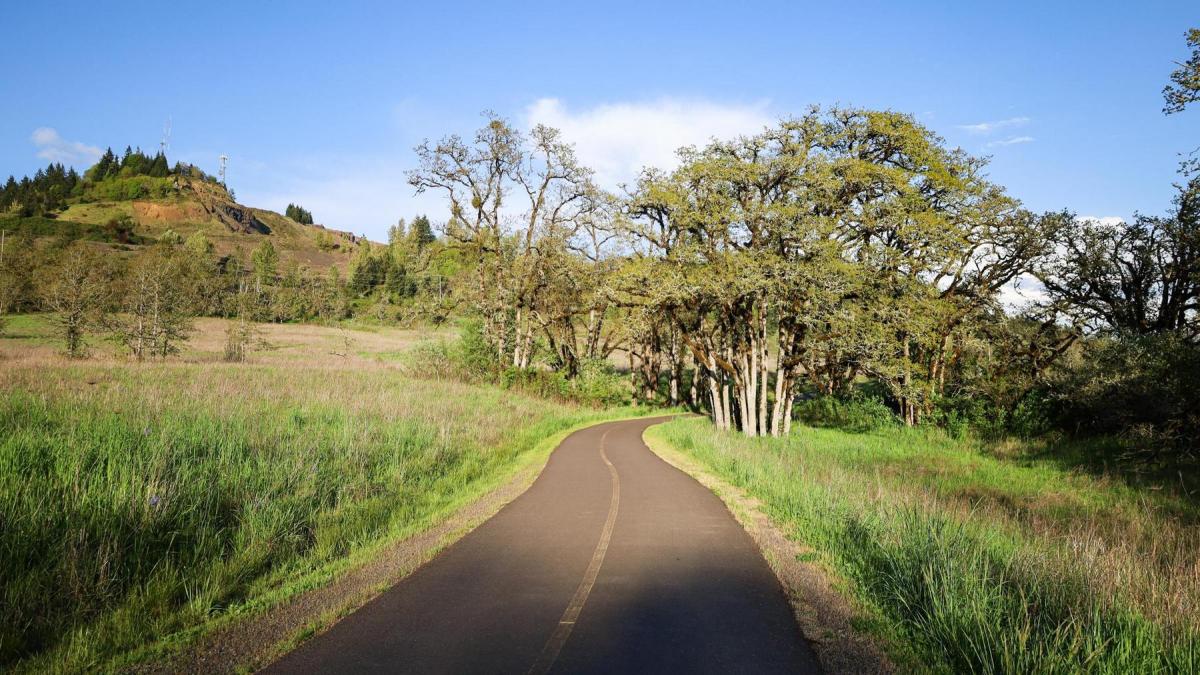
Tours Dorris Ranch is host to a variety of plants, flowers and birds. Come for a visit and enjoy a walk through this 250-acre historic site and natural area at your own pace with one of our self-guided tours.
Brochures with all the interesting facts, historical sites and a map of area paths are available at the entrance kiosk.
Dorris Ranch is open to the public weekdays and weekends from 6 a.m. till dusk for self-guided tours.
Filberts and Oregon's HistoryDorris Ranch is recognized as the first commercial filbert orchard in the United States and is listed on the National Register of Historic Places.
Oregon's history with filberts started in 1892 when George Dorris and his wife Lulu bought 250 acres of fertile land along the Willamette River and dedicated their lives to farming. After experimenting with a variety of crops, George established the first commercial filbert nut orchard in the United States. Over the next 50 years the Dorris family planted 9,200 trees at the ranch and harvested more than 50 tons of nuts each year.
Now, more than 100 years later, Dorris Ranch continues to make history as a fully-productive commercial filbert orchard. More than half of all the commercial filbert trees now growing in the U.S. originated from Dorris Ranch nursery stock.
Owned by the Willamalane Park and Recreation District, this 250-acre farm operates as a nonprofit organization.
The
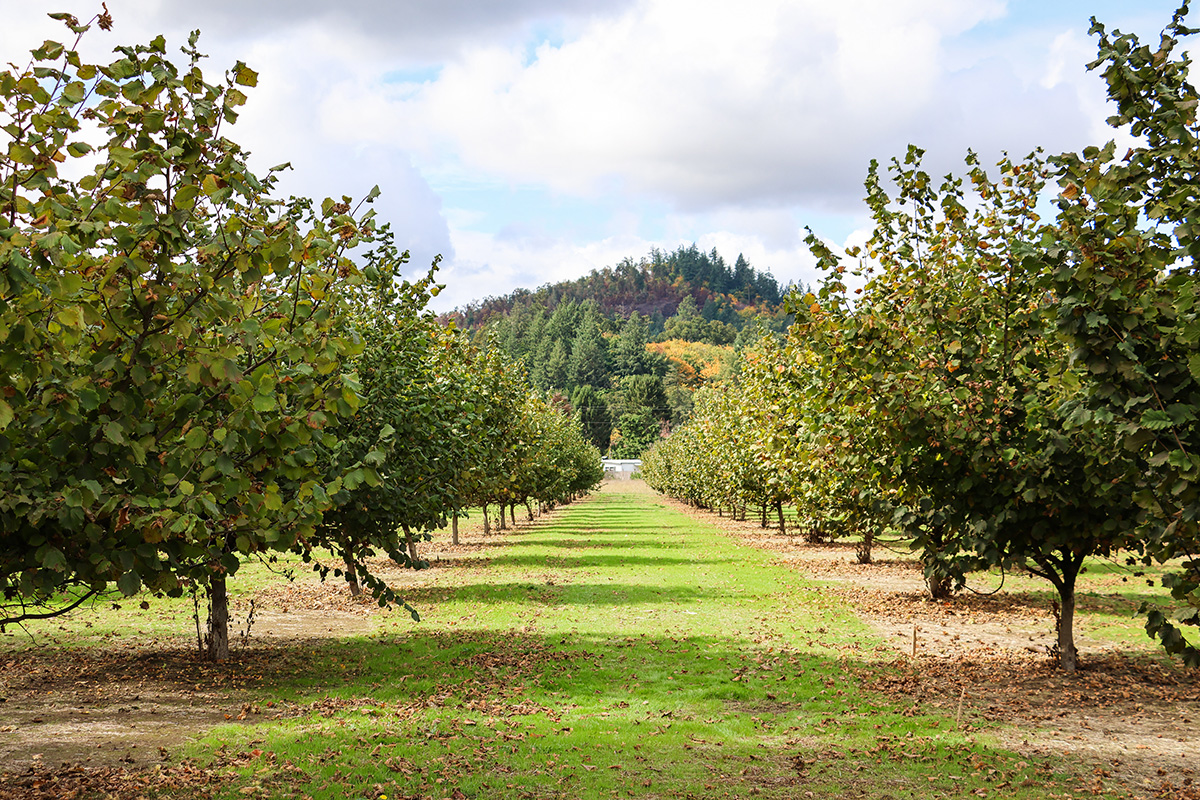
Orchards Each of the 11 separate orchards was named in order to help hired hands know where to work each day.
The approximate age of each orchard may be determined by looking at the spacing between trees. In the earliest orchards (planted beginning in 1903) the trees are planted very close together. As the years went by, spacing between the trees became greater. Dorris Ranch has a total of 9,250 filbert trees planted in 75 acres.
Most of the trees in the Dorris Ranch orchards are of the Barcelona variety. Because the Barcelona is self-sterile, other varieties—the DuChilly and the Daviana—are planted as pollinators every third tree in every third row.
Filberts are considered a "self-husking" nut. The husk falls off when the filbert drops from the tree. Machines can then pick up the filberts and take them directly to the drying machines. A local orchardist maintains the Dorris Ranch orchards.
Visitors to the Historic Village at Dorris Ranch can tour three areas of importance in early Oregon history.
Masterson Pioneer Homestead
Step back to 1852 and discover what life was like for a newly arrived pioneer immigrant family in the fledgling town of Springfield. William and Eliza Masterson and their five young children set out on the Oregon Trail for their "free" land. As part of the Homestead Act they staked out their 320-acre donation land claim on what was later to become Dorris Ranch. They settled their growing family in a simple, 12-foot-by-16-foot log cabin like this one. A nearby blacksmith shop shows children how the father of the family may have fashioned his tools, and a freight farm wagon depicts the mode of transportation.
New! Northwest Coast Native American Plank House
This 20- by 16-foot plank house is built of cedar planks, like the homes Native Americans built in this area before 1820.
Trapper's Cabin
This replica of an 1830s fur trapper's cabin helps students learn about this important era of Oregon history.
RentalsA great location makes for a great event! Convenient yet secluded facilities and picnic areas. Ideal for weddings, reunions, retreats, conferences, and more. Tables and chairs may be included with facility rental. Additional equipment and services, such as canopies and parking attendants, can be provided for an extra charge.
How to find the park
Dorris Ranch is located two miles east of Interstate 5 at the intersection of
South Second and Dorris Streets, in Springfield, Oregon.
1. From Pioneer Parkway West in Springfield, go south past Main Street and South
A Street.
2. Pioneer Parkway West becomes South Second Street.
3. Continue south to the intersection with Dorris Street.
4. Go straight ahead on the gravel road to the ranch.